
Elemental Enzymes Appoints Matt Werner as Chief Commercial Officer
Increasing nutrient uptake, without more fertilizer?
While it feels like we’ve been in a never-ending cycle of high fertilizer prices, we are also keenly aware of other changing market and trade factors that add an extra worry for growers dependent on NPK — nitrogen, phosphorus, and potassium — to push crops to their maximum potential.
Today’s question: With fertilizer costs sky-high, does another input really add more value — or just more cost?
Let’s start with some level-setting. We all know fertilizer is not 100 percent efficient. The nutrient levels actually taken up by the plant is what matters.
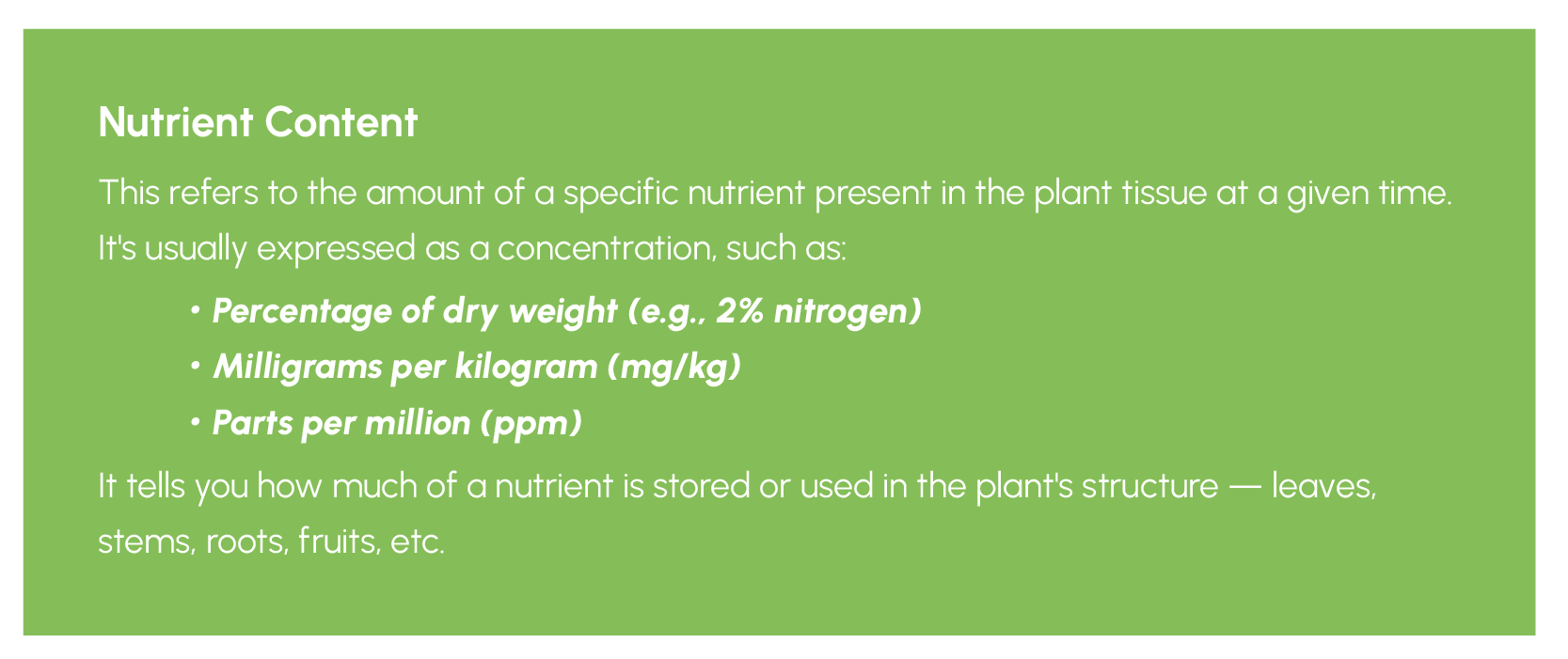
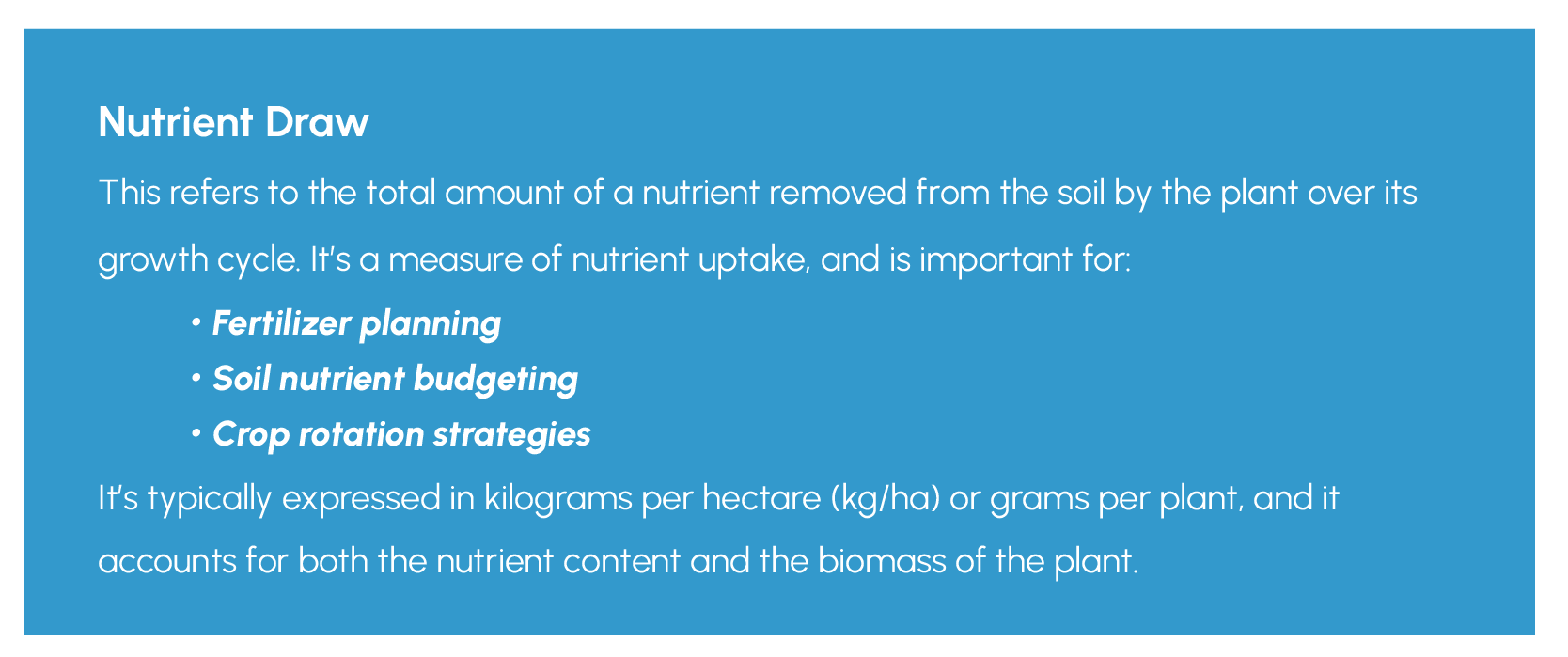
“To explain ‘nutrient draw,’” said Bret Gygi, Elemental Enzymes Director-Global Technical Development, “it is the conversion of ‘nutrient content’ into absolute quantities of nutrients accumulated within plant tissue. As an example, if a sampled plant has a dry weight of 150 grams and an N nutrient content of 5 percent, the N nutrient draw would be 7.5 grams. As such, nutrient draw is the best measurement for the amount of a nutrient that was mobilized from the soil.
“Only focusing on the nutrient content we see on tissue tests, and not taking the weight of the plant into consideration, could make a smaller plant look more interesting than a larger plant that equally increased all nutrients in parallel.”
So, if we assess the plants on any given acre for nutrient content, we can decipher the nutrient loads that were available to them. In this way, evaluating nutrient availability also dictates yield potential.
Back to the core of our question: Could an added enzyme help maximize that nutrient availability?
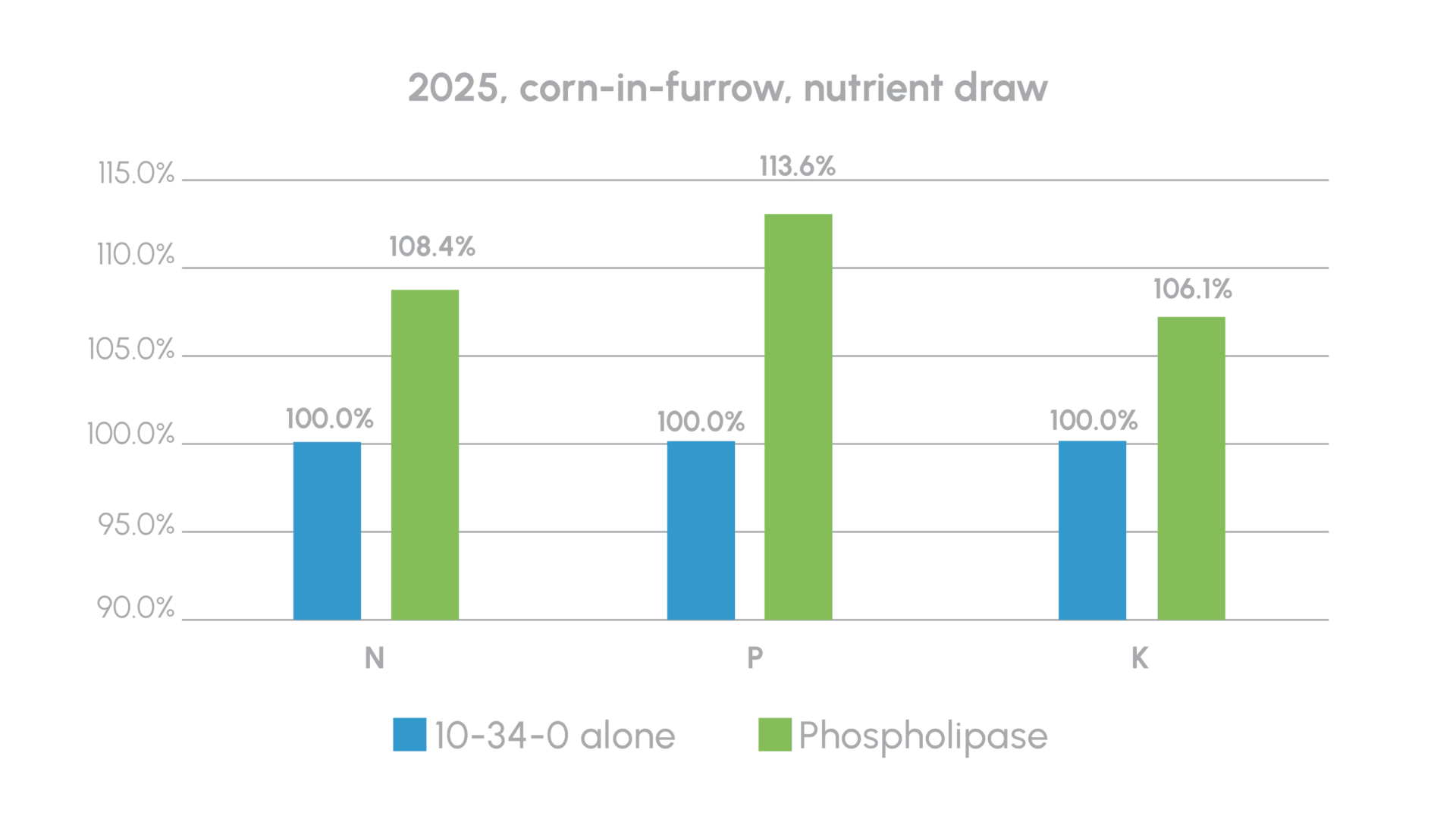
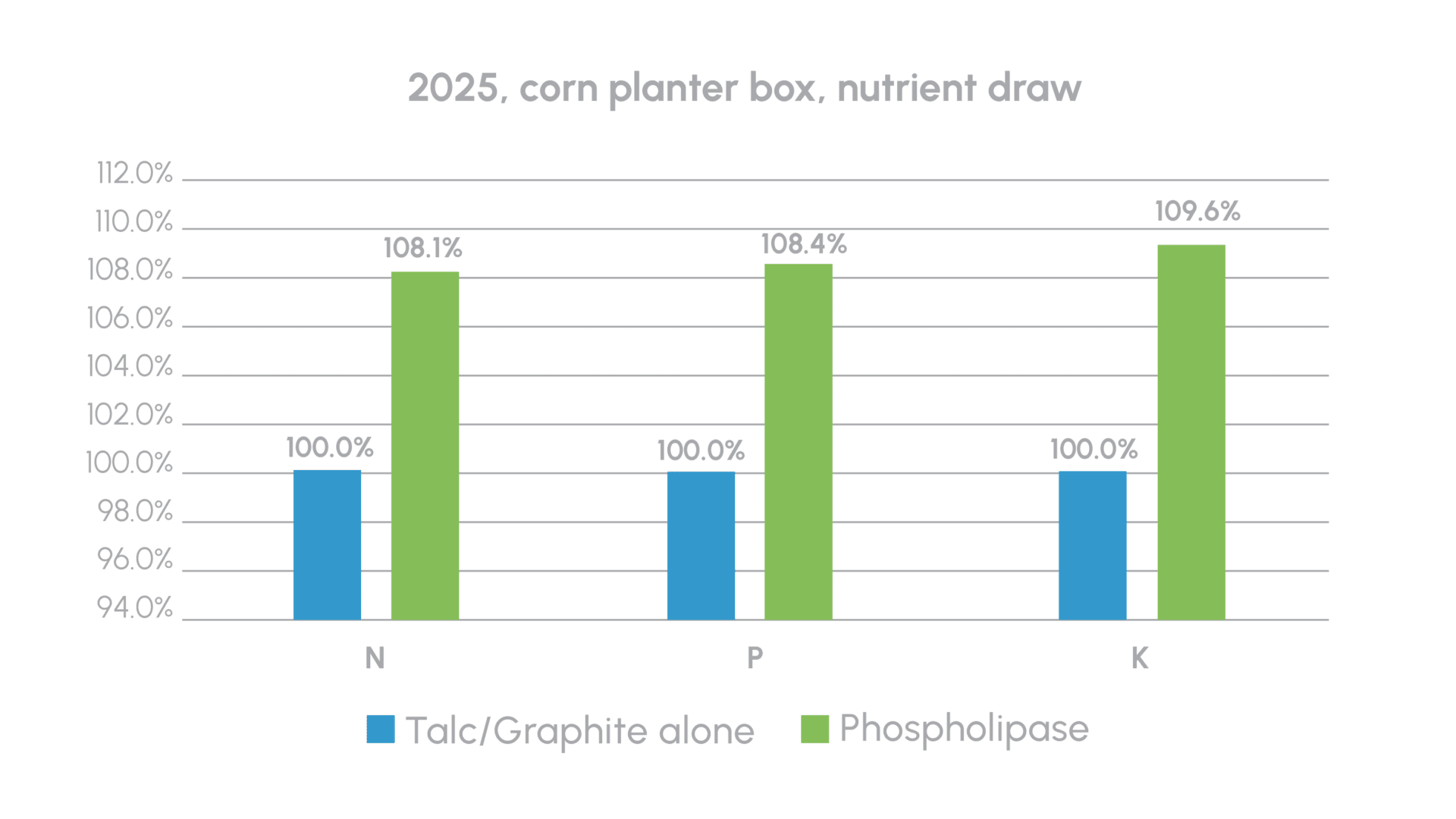
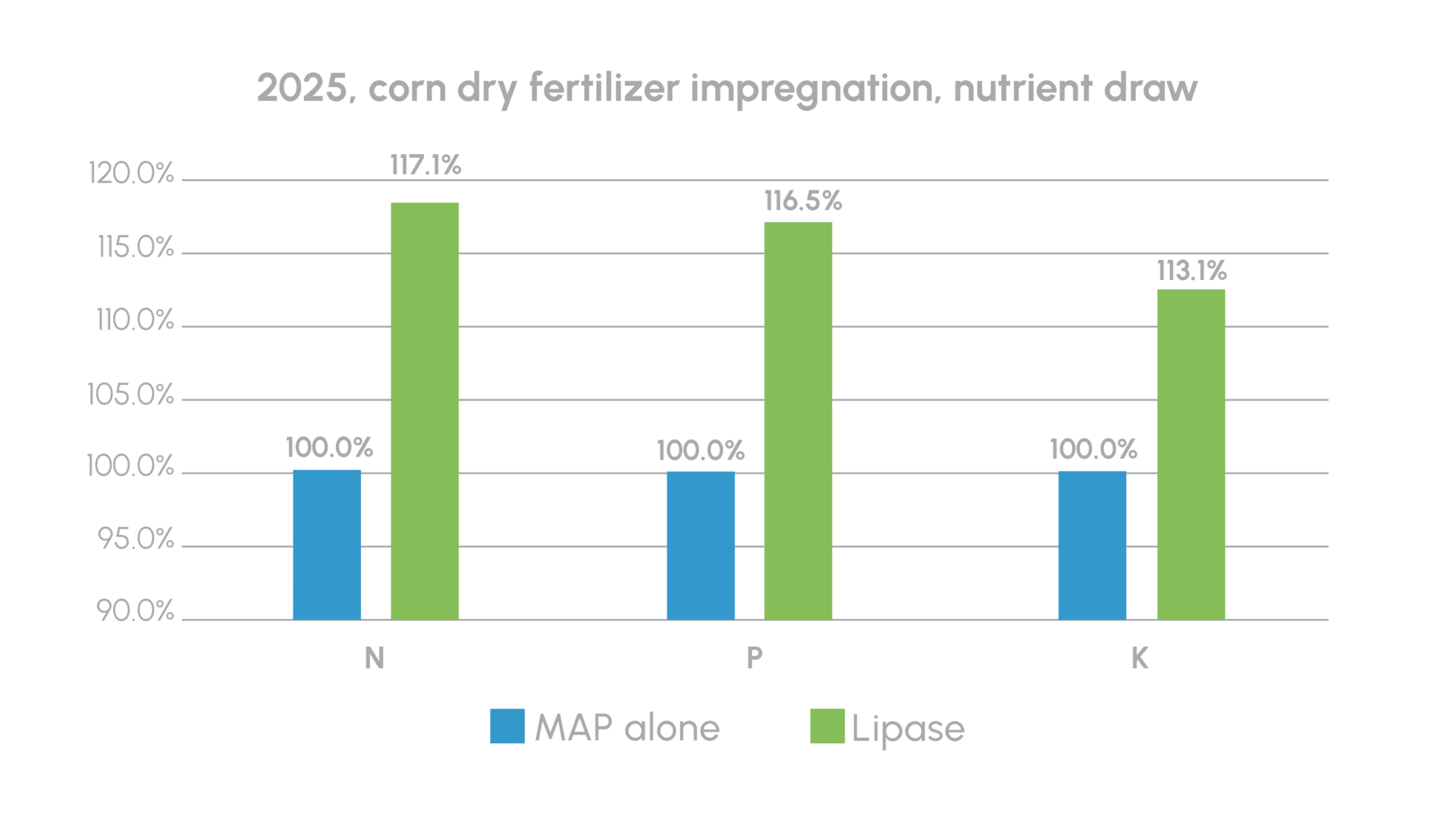
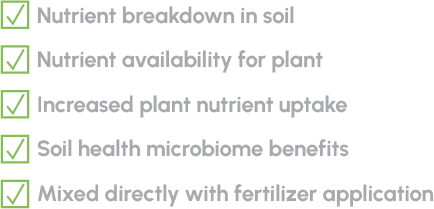
According to Gygi, when we look at enzyme application applied in-furrow on corn, and compare the typical nutrient draw of NPK to that with an added enzyme technology mix, we see significant improvement in uptake — up to a 20 percent increase in N draw. In phosphorus and potassium, we see similar increases. The benefit of enzyme technology versus other solutions is the utility across multiple application methods: in-furrow, planter box, and dry fertilizer.
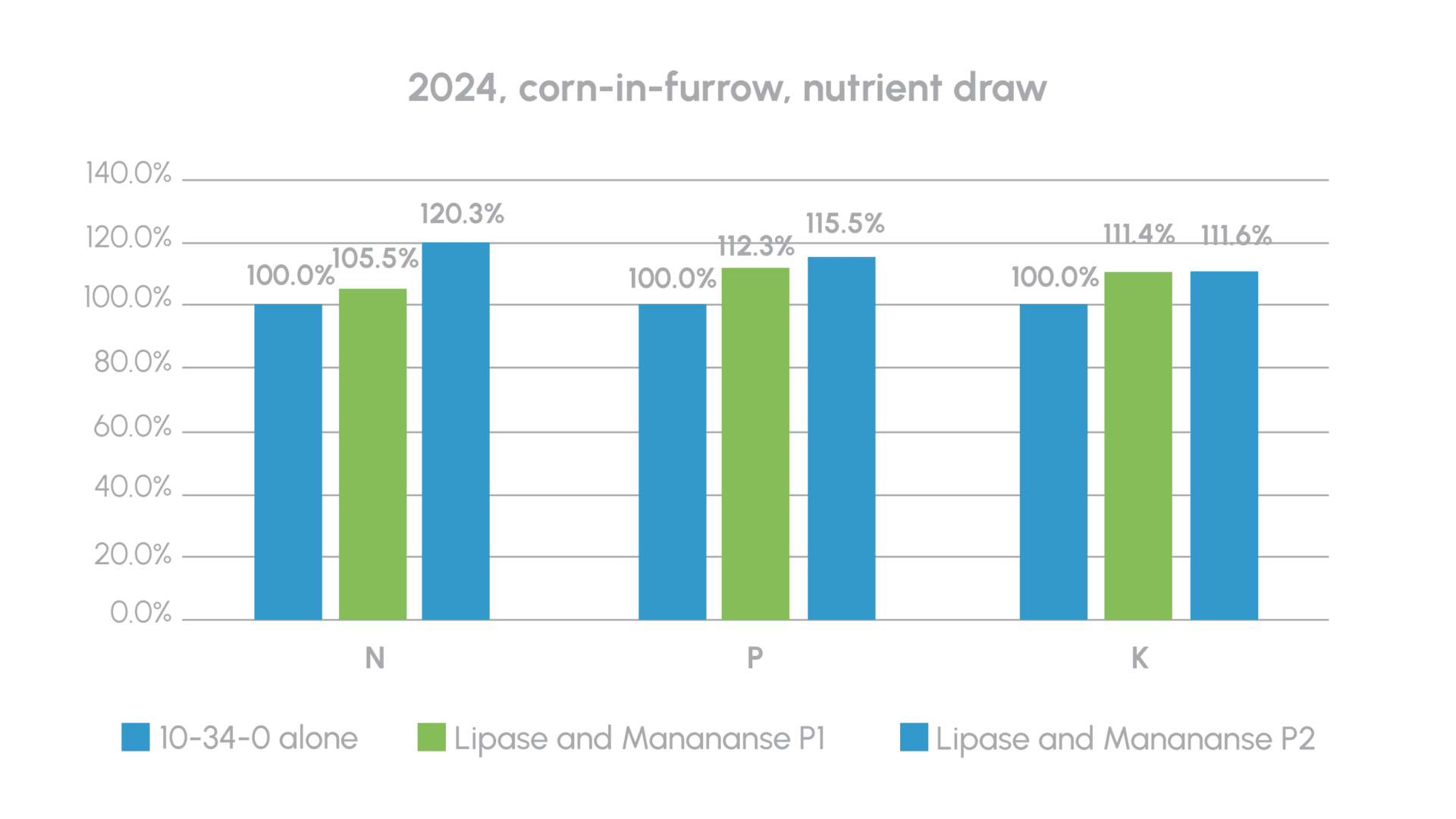
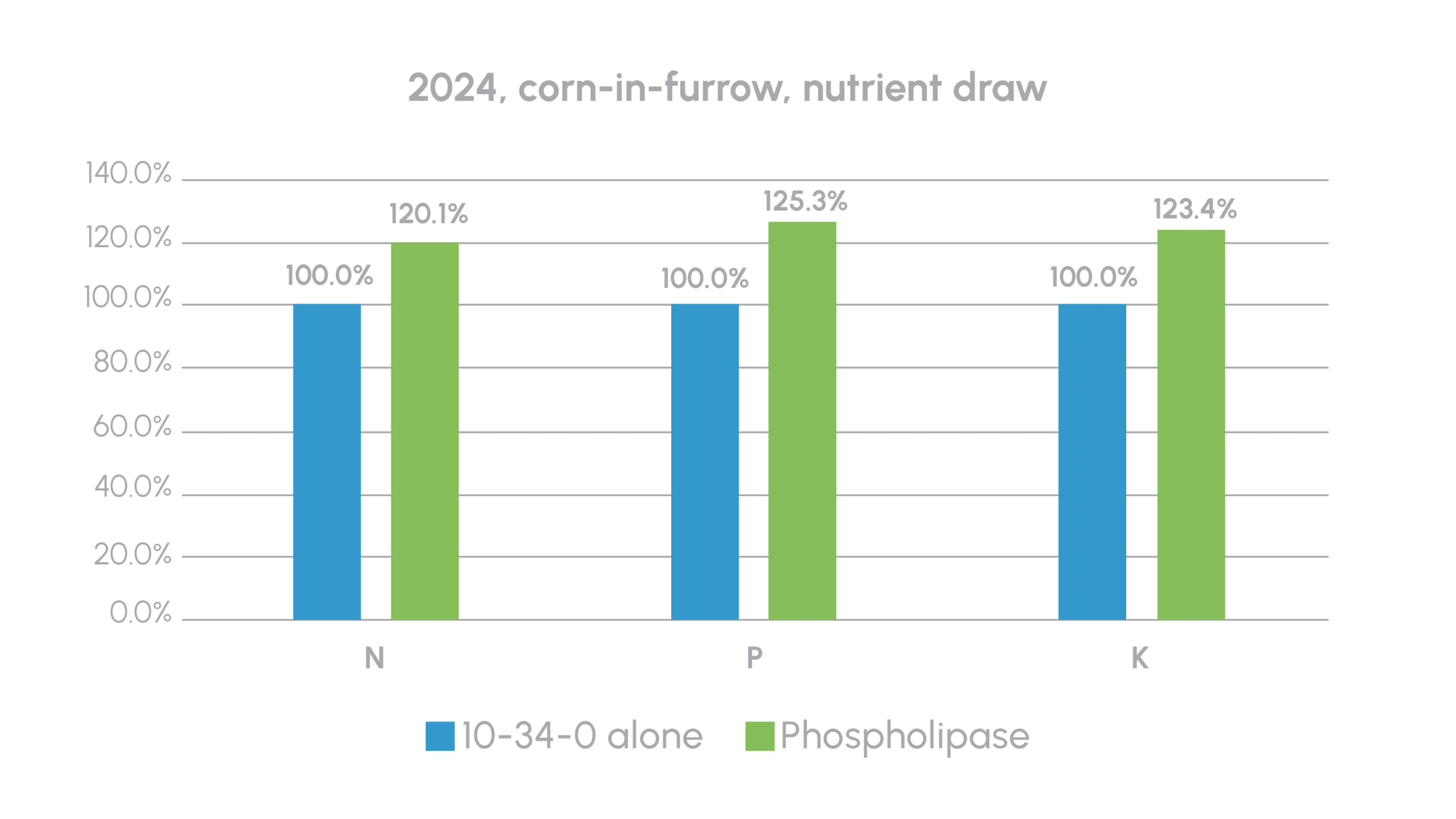
While every enzyme has a specific mode of action and type of molecule it releases, they consistently increase macronutrient draw (NPK) and boost both the plant’s and native microbe populations. This increases not just accessibility of the nutrients to the plant, but also the ability for the plant to absorb them.
What does this mean for our partner’s customers?
1) If farmers continue to apply the same fertilizer levels as prior to the addition of enzymes, they will see an increased uptake. This is highly beneficial on tough acres or in regions with expected lower yields.
2) Or, if farmers want to reduce the amount of macronutrients utilized and lower their overall fertilizer costs, adding the right enzyme mix offers a boost in nutrient value for the plant in lieu of additional fertilizer. “Nitrogen use efficiency” may be the newest buzzword, but the ability to maximize nitrogen uptake, lower nitrogen levels for reduced loss, and therefore see an economic benefit, is significant.
3) Finally, making use of organic matter already on the acre adds significant value for the nutrient draw opportunity for plants. Using specially formulated enzymes to activate the soil and break down and maximize organic matter availability increases NUE.
So what?
Take a look at a few of our recent corn trials. Different enzymes with different application methods all show the ability to increase nutrient draw.
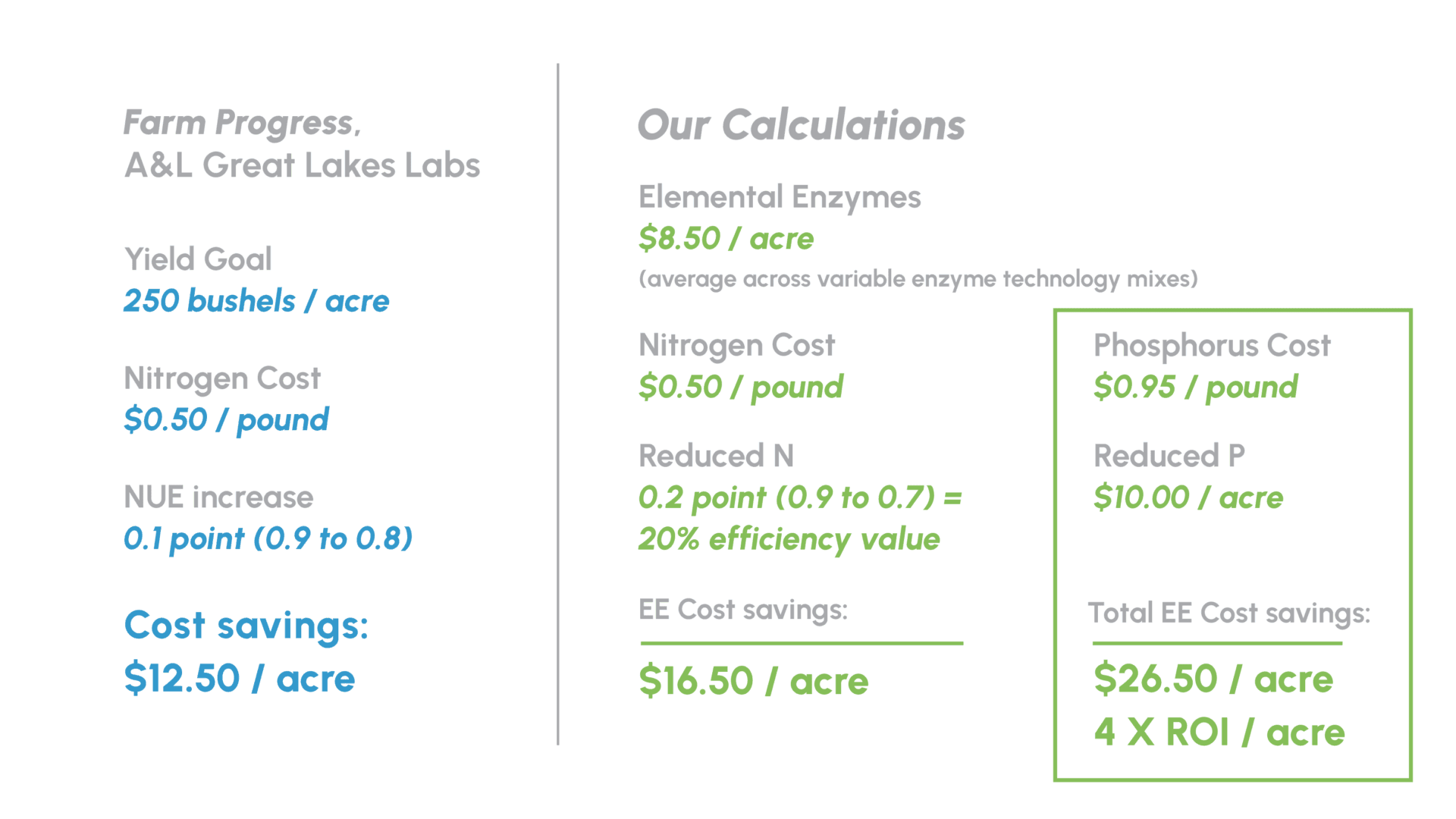
If we can find ways to lower N application alone, we capture a significant savings per acre.
A recent Farm Progress article calculated the following¹:
This benefits not only surfaces on broadacre crops, but on specialty crops as well.
At one multigenerational farm in South Australia where the soil had been intensively farmed with potatoes for more than 40 years, Elemental’s patented liquid enzyme fertilizer additives in soils that traditionally don’t have much phosphate available for the crop saw up to a 30 percent yield increase.
Better for uptake, bottom lines, and soil health
It is difficult to get a win-win-win situation these days, but amplifying nutrient use with naturally occurring enzymes could be just that. Elemental researchers have formulated products to be both effective in supporting increased nutrient uptake for the plants by increasing nutrients through microbe activity in the soil, and hardy enough to stand up to transport, storage, and blending/application needs in many production systems. This allows any farmer to easily use them without making major changes to their routine. The added benefit for bottom lines with increased nutrient availability can be substantial.
And, while the enzyme technology is doing its work for this year’s crop, it is also actively engineering the soil for better cropping in the future.
In answer to today’s question: With fertilizer costs sky-high, does another input really add more value — The answer is, unequivocally, yes.
Adding Elemental’s patented technology mix to current fertilizer applications offers a multitude of benefits, paying its own way into every furrow, planter box, and mix-tank.